Pages

Showing posts with label Volkswagen. Show all posts

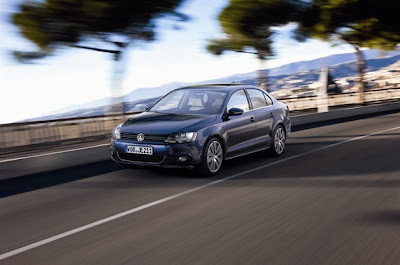
Volkswagen Jetta 2.0 TDI 140 DSG

Volkswagen's Jetta is back, and it's predicted to sell as hotly in the UK as ever... Estimated annual volume is all of 3000 units a year, equating roughly to Golf sales over a decent fortnight. The UK doesn't quite 'get' saloons like this one.

They get them in the States, where more than 120,000 Jettas will sell a year. It's also cheap (there): it's built in Mexico, where US models are fitted with torsion beam rear axles and hard interior trim. Euro variants are priced higher thanks to multi-linked rears, better trimmed insides and their Atlantic cruise. Still, £17k-£22k or so isn’t bad, given its size.

See pics of the Volkswagen Jetta 2.0 TDI in action
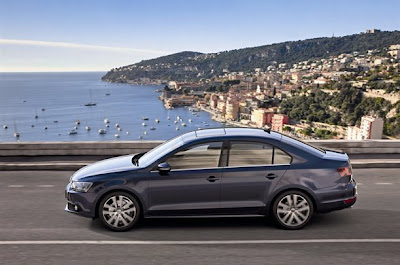
Ah yes, the Jetta's size. VW says it bridges the gap between the Golf and Passat. Yet, at 4.64m long it's a good 45cm longer than a Golf, and just 12cm shorter than a Passat. Its boot holds 510 litres (Golf only 350, Passat 545) and there's ample room for adults to sit behind adults in the cabin.

The Jetta is longer even than a BMW 3-Series, leaving it in a peculiar hinterland, especially for those compiling company car lists, entitled 'what the heck is it?'

That solving nothing, let's move on.

What's it like?
Not at all bad. Competitive in its class? Definitely, if you can define its competitors. The meat of the Jetta range finishes where the Passat's gets going, so it undercuts its nearest obvious rival, Volvo's S40, which it also betters.

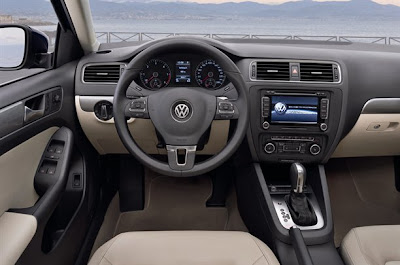
In terms of interior quality the Jetta's at Golf, perhaps just sub-Golf, levels rather than Passat ones, but in terms of dynamism and involvement it's closer to its larger sibling. Which means it's… fine. Its electrically-assisted steering is responsive and well weighted, it rides respectably, turns adequately.

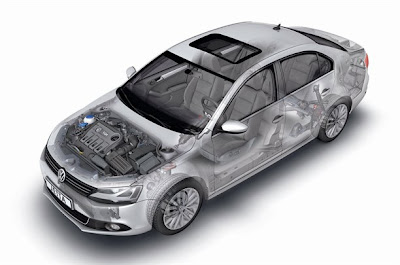
Our test car was equipped with the ubiquitous 2.0-litre TDI unit developing the same 138bhp you'll find throughout the VW range, and noise levels are low. Very low, in fact. The six-speed optional DSG transmission (a six-speed manual is standard) is fine, too – at its worst during low-speed manoeuvring.

All of which makes the Jetta a car with some reasonably compelling characteristics.

Should I buy one?
Maybe. Tell me you were thinking of buying one, and I'd think that was a decent enough idea.

Yet, tell me you wanted a family-sized Volkswagen, and it wouldn't occur to me to recommend a Jetta over a Golf. Plus ça change.


Volkswagen Jetta 2.0TDI 140 DSG
Price: £21,000 (est); Top speed: 136mph; 0-62mph: 9.5sec; Economy: 53.3mpg; Co2: 138g/km; Kerb weight: 1411kg; Engine: 4cyls in line, turbodiesel; Power:138bhp at 4200rpm; Torque: 236lb ft at 1750-2500rpm; Gearbox: 6-spd dual-clutch auto


Volkswagen Jetta

2011 VW Jetta

There’s good news for fans of VW’s perennial favorite sedan: the 2011 Jetta gives you more style for less money. The 2011 model boasts distinctive new exterior styling and has grown nearly four inches in length compared to the 2010 model. The interior hasn’t changed much since 2010, but that’s not a bad thing since VW routinely receives praise for interior comfort and quality. The best news? The starting price for a base 2.0 liter Jetta will be a miserly $15,995.00.

2011 VW Jetta

Buyers in the U.S. will have a choice of four motors, starting with the base 2.0 liter four, which produces 113 horsepower and yields a zero to sixty time of 10.3 seconds with a manual transmission (11.3 seconds with the automatic). Fuel economy for the 2.0 liter motor is rated at 34 mpg for the manual and 32 mpg for the automatic. Top speed, which most Jettas equipped with this motor will never see, is 120 miles per hour.

Next up is the 2.5 liter five cylinder, derived from the V10 used in the Lamborghini Gallardo: it makes 168 horsepower and will hit sixty in 8.0 seconds with the manual gearbox and 8.5 seconds with the automatic. Fuel economy is still reasonable at 33 mpg highway (manual transmission) and 31 mpg highway (automatic). Top speed for the five cylinder is listed as 125 mph.

The motor favored by those who like driving will be the 2.0 liter, four cylinder turbo. Rated at 197 horsepower, the forced induction four will see sixty in 6.7 seconds with the manual transmission or 6.8 seconds with VW’s outstanding DSG gearbox. Fuel economy is surprisingly good (assuming you don’t hit max boost on every shift), and comes in at 33 mpg with the manual and 32 mpg with the DSG transmission. Top speed is rated at 130 mph.

Finally, there’s the TDI motor that diesel fans know and love. The 2.0 liter turbodiesel makes 138 horsepower, good enough to get your Jetta to sixty in just under nine seconds with the manual tranny, or just over nine seconds with the DSG. Fuel economy , as you’d expect from a TDI, is impressive: the DSG version gets 42 mpg highway and the manual gearbox TDI sees 41 mpg. Top speed is 125 miles per hour.

Volkswagen Tiguan

2011 Volkswagen Tiguan


Along with a refreshed Phaeton, Volkswagen also pulled the satin off a refreshed Tiguan here in Beijing. Like the flagship, the Tiguan has adopted the new corporate horizontal bar grille that we've seen on other recent VWs, including the Mk VI Golf. As near as we can tell, not much else has changed. The new look serves the Tiguan well, giving its face a lower, wider appearance. We're guessing the refresh will hit U.S. shores this fall when the 2011 models arrive.

VW Polo

Volkswagen Polo wins 2010 World Car of the Year award

Awards season is finally winding down with the 2010 World Car of the Year and World Performance Car of the Year being handed out this morning at the 2010 New York Auto Show. After whittling the fields down to three finalists in each category, the panel of 59 international journalists voted one last time to crown the World Car of the Year.

While the Toyota Prius, Volkswagen Polo and Mercedes-Benz E-Class were nominated, it was the Polo that took home the gold for 2010 World Car of the Year.

On the performance vehicle front, the nominees were the Audi R8 V10, Porsche 911 GT3 and Ferrari California, with the Audi winning top honors.

They also handed out a Design award for a group of finalists including the Citroen C3 Picasso, Kia Soul and Chevrolet Camaro. That honor went to the Camaro. (U-S-A! U-S-A!)

The Green category saw Volkswagen's line of diesel-powered BlueMotion vehicles beat out the Toyota Prius and Honda Insight hybrids

Volkswagen Touareg sports

2011 Volkswagen Touareg sports

We could say Volkswagen was tired of making an SUV that ended up being rather expensive – for a VW – after you stuck a few options on it. So in addition to the lost weight, the new Touareg has lost some of the four-wheel drive equipment that made the last one so spendy. This one comes standard with a Torsen limited-slip differential, and then you can order a Terrain Tech Pack that adds the differentials and serious off-road capability that once came standard. That takes fuel economy upward, an boost also helped by the increased curve and lower Cd. VW sold 500,000 units of the previous-gen Touareg and it should do even better with this one.

Show Premiere I:
New Touareg Guides SUV Idea into the Future

Touareg debuts with hybrid drive and high-tech TDI engines
Volkswagen SUV is 208 kilograms lighter and 20 percent more fuel efficient

Wolfsburg/Geneva, March 2010. In a show premiere at the Geneva Motor Show Volkswagen is unveiling the completely redeveloped Touareg − and with it the most technically innovative Volkswagen since the brand has been in existence. This Touareg is reinterpreting the fasci nating idea of a multipurpose SUV in a contemporary way – thanks to its up to 25 percent more fuel efficient engines and a large variety of new assistance and safety systems. The Touareg will be the first Volkswagen to be offered in a hybrid version (V6 TSI plus E-motor).

When the V6 TSI and E-motor operate simultaneously (boosting), this produces a combined power of up to 279 kW /380 PS as measured on a dynamometer, and a torque of maximum 580 Newton-metres. The Touareg Hybrid sets standards among fully off-road capable SUVs with petrol engines with its fuel consumption value of just 8.2 litres fuel per 100 kilometres. It can be driven at speeds of up to 50 km/h in purely electric mode − emissions-free.

Fuel economy and emissions values of the conventionally powered Touareg versions were significantly improved. Consider the V6 FSI, a direct-injection petrol engine with 206 kW /280 PS: With a fuel econo my of 9.9 l/100 km, the powerful 360 Newton-metre 3.6-litre engine consumes a substantial 2.5 litres less than the previous model. This combined fuel consumption corresponds to CO2 emissions of 236 g/km. And that is exactly 60 g/km less than before.

The diesel engines were made more fuel efficient as well. With regard to power, an advanced version of the successful V6 TDI that continues to have 176 kW/240 PS (European version) right at market launch, marks the entry level into the world of the Touareg; the 550 Newton-metre strong turbo-diesel consumes a pioneeringly low 7.4 l/100 km (equivalent to 195 g/km CO2), which is 1.9 litres less than before. CO2 emissions were reduced by 49 g/km compared to the previous Touareg V6 TDI and a respectable 24 g/km compared to the already very good previous model with BlueMotion Technology. Completely new to the Touareg programme is a V8 TDI with 4.2 litres displacement and 250 kW /340 PS.

The combined fuel consumption here – extremely good considering its power and amazing maximum torque of 800 Newton-metres – is 9.1 l/100 km (equivalent to 239 g/km CO2). Engines offered, both diesel and petrol, will vary depending on the specific country.

New era SUV – lighter, more aerodynamic and fuel efficient
As has already been accomplished on the globally successful, smaller SUV, the Tiguan, Volkswagen is systematically striving for sustain ability on the new Touareg too. The first precondition has been met: The weight of the base model Touareg has been reduced by 208 kilograms.

A quantum leap. Yet, the body has five percent greater torsional rigidity, which makes it the leader in its competitive class. The second precondition has also been achieved: Designers attained a significantly improved Cd value. It was reduced from 0.38 to 0.35. Along with aerodynamic refinement measures, another factor at work here is that this Touareg sits lower to the ground than the previous model. This, to gether with a front end in the style of the new Volkswagen Design DNA, results in a smaller frontal area. The third precondition: All engines, now offered with a standard 8-speed automatic transmission – a first in this market segment – demonstrate significant fuel economy advantages over the previous model; in some cases the advantage is far greater than two litres per 100 kilometres.

SUV for all trails – all-wheel drive in two versions
Another element which has been modified in the quest for reduced fuel consumption is the Touareg's standard all-wheel drive. In the base version (4MOTION), all new generation Touaregs have all-wheel drive with Torsen limited-slip differential (4MOTION; 31 degree climbing gradient). Like the Tiguan Track & Field, the Touareg also has an "Offroad driving programme", which − at the press of a button − tunes the ABS, EDS and ASR for off-road duty, activates Hill Descent Assist and adjusts the automatic gearshift points.

Instead of a Torsen differential, the V6 TDI can be ordered with an optional "Terrain Tech Packet" that has an even more rugged transfer case designed for off-road driving. It includes reduction gearing and centre and rear differentials, each with up to 100 percent locking (4XMOTION; 45 degree climbing gradient). Similar to the system on the first Touareg generation, this "4XMotion" also has a rotary switch the driver now uses to adapt the car to specific conditions over five levels:

1. "On-Road";
2. "Off-Road" (like "Off-road driving programme" plus automatic control of the mechanical locks);
3. Low (like "Off-road" plus activation of reduced gearing, higher shift points, no automatic upshift in manual mode);
4. Addition of centre differential lock;
5. Addition of rear differential lock. Equipped like this, the Touareg can conquer a wide range of the Earth's terrains.

SUV for everyday life – more space, more innovations
Volkswagen has not only made the new Touareg lighter, more fuel efficient and an agile performer; it has also made it into an even more versatile, all-round vehicle. The new interior was made more functional, the seats more comfortable and leg room in the rear is increased thanks to a 41 millimetre extension of the wheelbase to 2,893 milli metres. Now the rear bench seat has 160 millimetres in longitudinal adjustment, and the backrest angle can be altered.
Electrically unlatched at the press of a button as an option, it folds down in seconds and frees up 1,642 litres of cargo space. Already standard equipment in the base version is a radio-CD and info system, which is intuitively controlled via a 6.5-inch touch-screen. The radio-navigation system in the top version offers a 60 Gigabyte hard drive and 3D building representation.

The parking brake is now activated by pushbutton. The engine (V6 versions) automatically shuts off at traffic lights and restarts as soon as the driver releases the brake pedal (Stop-Start system). The V6 versions gather valuable kinetic energy during braking and coasting and store it.

The oil dipstick has now been retired: The engine oil level is displayed electronically in this Touareg. As an option, the tailgate can be opened and closed automatically. The Touareg can also be specified with a large panoramic sunroof – the largest ever used on an SUV − to provide maximum light in the cabin even on overcast days.

There are new features in the vehicle's assistance systems too. The innovative "Area View" utilises four cameras situated around the car to transmit an accurate view of the Touareg's surroundings to enhance safety. Also offering protection are up to nine airbags. Lane Assist ensures that the vehicle does not stray from the right path; meanwhile, Side Assist warns of vehicles approaching from the rear when changing lanes. Adaptive Cruise Control (ACC) plus Front Assist can brake the car to a stop in an emergency. ProActive occupant protection, also completely new, networks the assistance systems and ensures that in case of an accident not only are the belts tensioned, but the windows and panoramic sunroof are closed as a function of the vehicle's transverse dynamics.

An absolute world's first: Bi-xenon headlights with Dynamic Light Assist.
This camera-based high beam headlight actually "sees" oncoming traffic and automatically adjusts – via the curve lighting module and individually for each headlight − the high beam to eliminate unwanted glare. The enhanced safety and convenience offered by Dynamic Light Assist is as significant as the introduction of Xenon technology itself once was. In the sum of its properties, the new Touareg is not only one of the most sustainable SUVs in the world, but definitively also one of the safest passenger vehicles of all times.

Touareg – the best of two worlds
About 500,000 car drivers chose to buy the first generation of the Touareg. It is a luxury sport utility vehicle that offers a high level of comfort, sporty driving properties, avant-garde styling, excellent quality and unlimited expedition capabilities – essentially the best of the passenger car and off-road worlds unified in one concept. This legacy is now being continued in the new Touareg – a high-end and versatile all-round vehicle that brings these two worlds together even more perfec tly. The Touareg will be available at dealers as soon as in April of this year.